Lab-Grown vs Natural Diamonds: Are They Real?
In This Article:
- Are Lab-Grown Diamonds "Real" Diamonds?
- The Science: HPHT vs. CVD
- Market Realities: Value and Price in 2026
- Frequently Asked Questions
- The Verdict: Should You Buy Lab-Grown in 2026?
As Greensboro's trusted jewelry experts, the team at Jewelry Authority frequently encounters a vital question: "Are lab-grown diamonds actually real?" With the 2026 jewelry market offering more choices than ever, it is essential to understand the science, value, and ethics behind your purchase. Below, our GIA-trained gemologists break down the facts to help you decide which diamond is right for your story. For a deeper cost breakdown, see our companion post on lab-grown diamonds in 2026.
Are Lab-Grown Diamonds "Real" Diamonds?
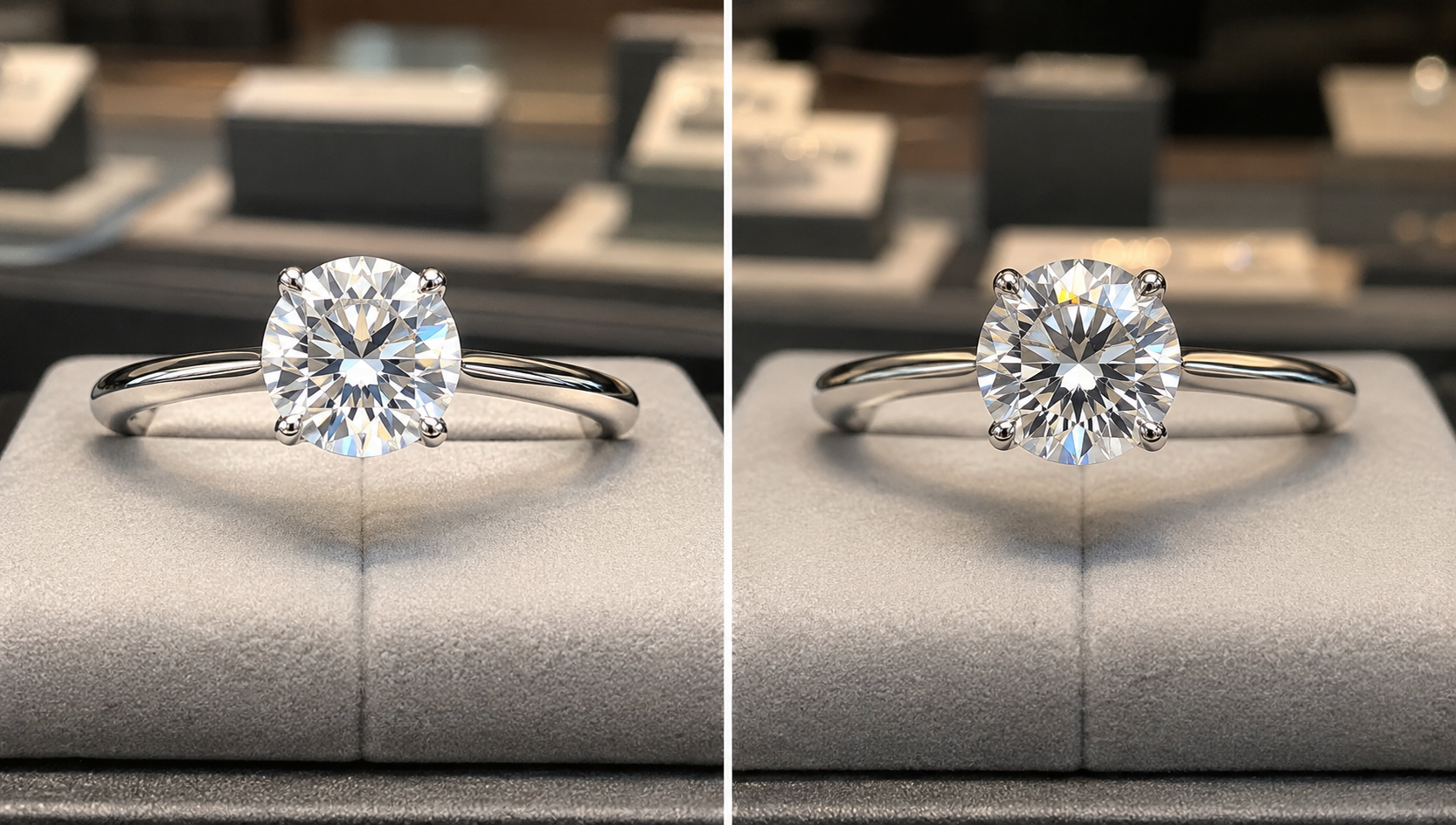
The short answer: Yes. Physically, chemically, and optically, a lab-grown diamond is identical to one pulled from the earth. Both are composed of pure carbon in a crystalline structure. They rank as a 10 on the Mohs Scale of Hardness, offer the same refractive index (sparkle), and are indistinguishable to the naked eye—and even to most traditional jewelry tools.
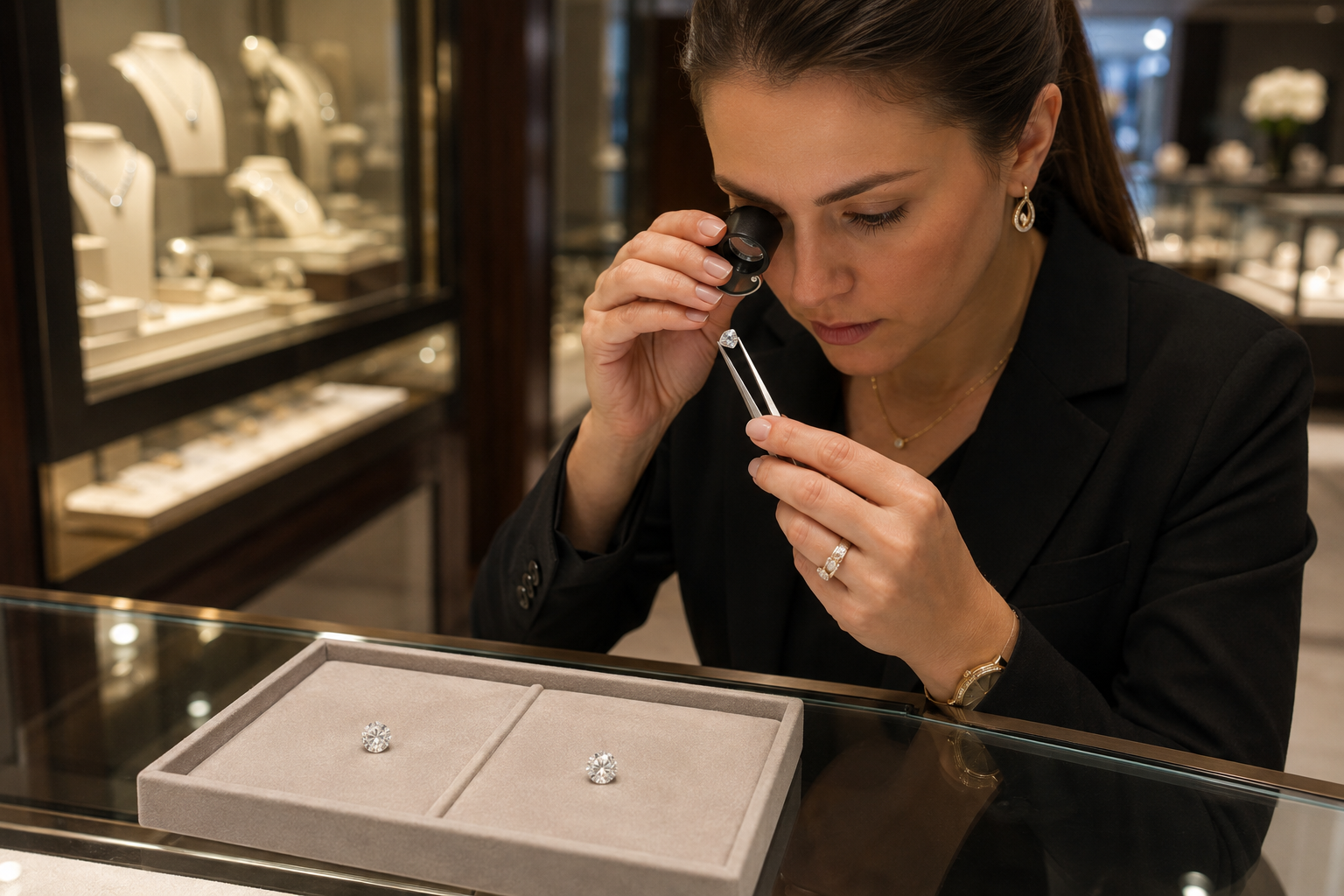
Can a Jeweler Tell the Difference?
While a standard jeweler's loupe cannot distinguish between the two, professional gemologists use specialized advanced technology to detect growth patterns. At Jewelry Authority, we use top of the line technology to test loose stones and mounted jewelry up to 50 carats. In simple terms, this machine uses UV light and visual analysis—like a high-tech scanner that works in about 20 seconds—to reliably identify natural diamonds, lab-grown stones (both CVD and HPHT), and simulants like Moissanite and Cubic Zirconia (CZ). Detecting CZ is particularly vital, as many other market devices fail to do so. Natural diamonds often contain trace amounts of nitrogen, whereas lab-grown stones have specific markers depending on their growth method. We use these tools to ensure total transparency for every customer.
The Science: HPHT vs. CVD
Diamonds don't just "appear"—they are grown. In a lab, there are two primary methods used to replicate the Earth's natural volcanic heat and pressure:
- HPHT (High Pressure High Temperature): This is the "old school" lab method. It mimics the crushing pressure of the Earth's mantle. HPHT stones are often used to create very high-color grades.
- CVD (Chemical Vapor Deposition): A newer, high-tech process where a "diamond seed" is placed in a vacuum chamber filled with carbon-rich gas. The gas is ionized, causing carbon to rain down and crystallize on the seed.
Market Realities: Value and Price in 2026
One of the most common FAQs we receive is regarding the price gap. In 2026, the cost difference has widened significantly:
| Feature | Lab-Grown Diamond | Natural Diamond |
|---|---|---|
| 2026 Avg. Price (1ct) | ~$725 - $850 | ~$3,800 - $4,500 |
| Resale Value | Low / Minimal | Stable / High |
| Scarcity | Infinite (Manufactured) | Finite (Mined) |
Will lab-grown diamonds hold their value?
It is important to be candid: lab-grown diamonds are a depreciating luxury good. Much like a high-end smartphone, the technology to produce them improves every year, which drives the market price down. If you are looking for an heirloom that retains "melt" or resale value, a natural diamond or estate piece remains the gold standard.
Frequently Asked Questions
Are lab-grown diamonds ethical and better for the environment?
Many couples choose lab-grown for their reduced surface-level environmental impact. While they do require significant electricity to produce, they bypass the earth-moving required in traditional mining.
Can you insure a lab-grown diamond engagement ring?
Absolutely. Insurance companies like Jewelers Mutual or your standard homeowners' policy treat lab-grown diamonds the same as natural ones. Your premium will simply be lower because the replacement cost (the value of the stone) is lower.
IGI vs. GIA Certification: Does it matter?
Both the International Gemological Institute (IGI) and the Gemological Institute of America (GIA) provide rigorous grading.
- IGI is the market leader for lab-grown stones and is known for speed and value.
- GIA is often viewed as more "conservative" and strict in its grading. At Jewelry Authority, we recommend a GIA-certified stone if you want the absolute highest level of grading confidence.
The Verdict: Should You Buy Lab-Grown in 2026?
The decision comes down to your priorities:
- Choose Lab-Grown if: You want a massive "look" for a fraction of the cost, or if you prefer a tech-forward, modern origin story. Browse our lab diamond collection.
- Choose Natural if: You value rarity, historical significance, and the long-term financial "store of value" that only a billion-year-old stone provides. See our loose stones.
Comparing other options too? Read moissanite vs. diamond and the 4Cs of diamonds.
Ready to see the difference in person? Visit Jewelry Authority in Greensboro today. Our experts will put both side-by-side under the microscope so you can choose the diamond that speaks to you.