The 4Cs of Diamonds: A GIA Gemologist's Guide
In This Article:
- Cut: The Engine of Sparkle
- Color: The Search for "White"
- Clarity: Identifying the Fingerprint
- Carat: Weight, Not Size
- Frequently Asked Questions
- The Jewelry Authority Difference
When stepping into a jewelry store, the terminology can feel overwhelming. At Jewelry Authority, we believe an informed customer is a confident one. Whether you are shopping for a classic natural diamond or a modern lab-grown alternative, the global standard for quality remains the same: The 4Cs.
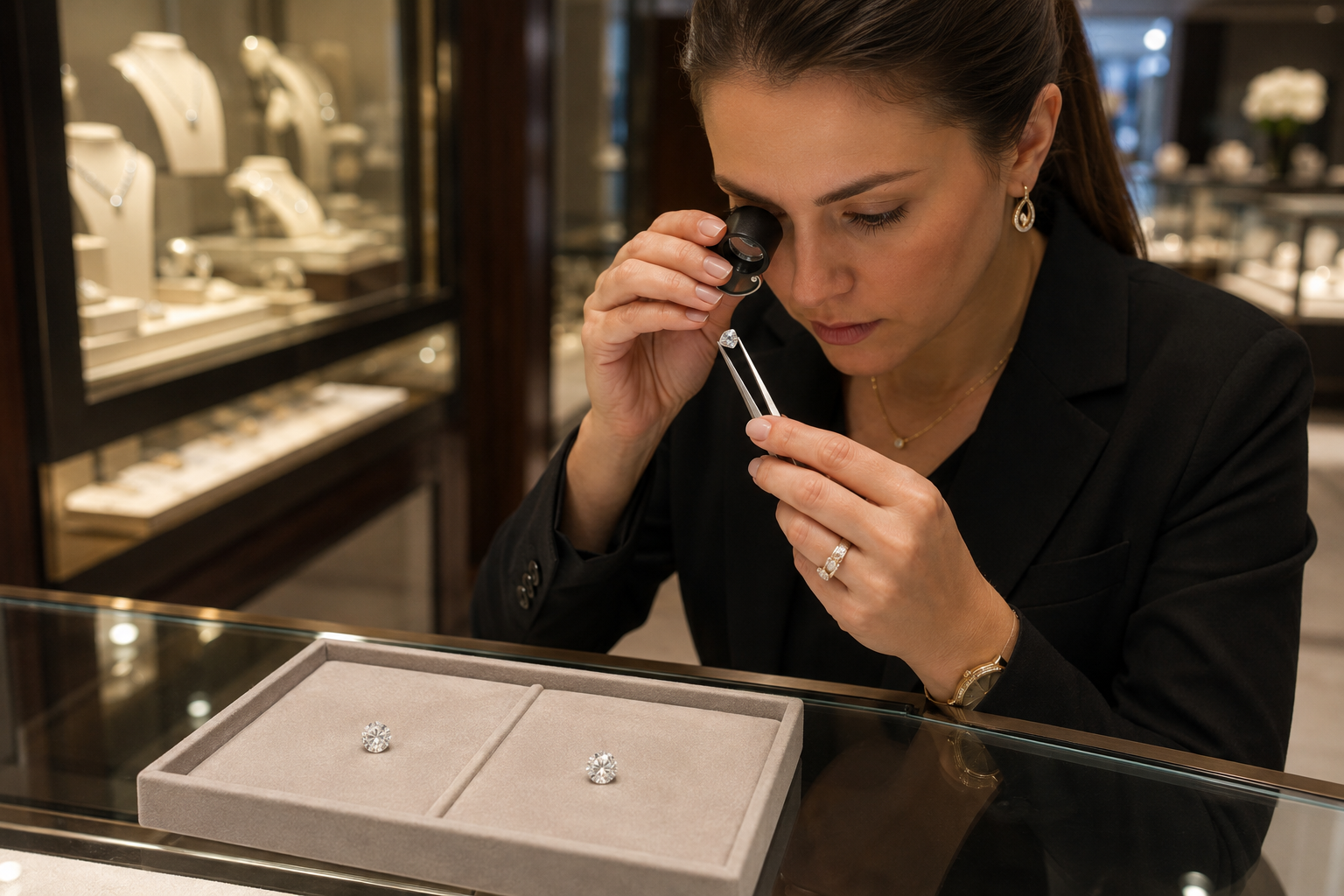
Developed by the Gemological Institute of America (GIA), these four factors determine a diamond's beauty, rarity, and price. Below, our graduate gemologists break down what actually matters when you're looking at a stone under the loupe.
1. Cut: The Engine of Sparkle
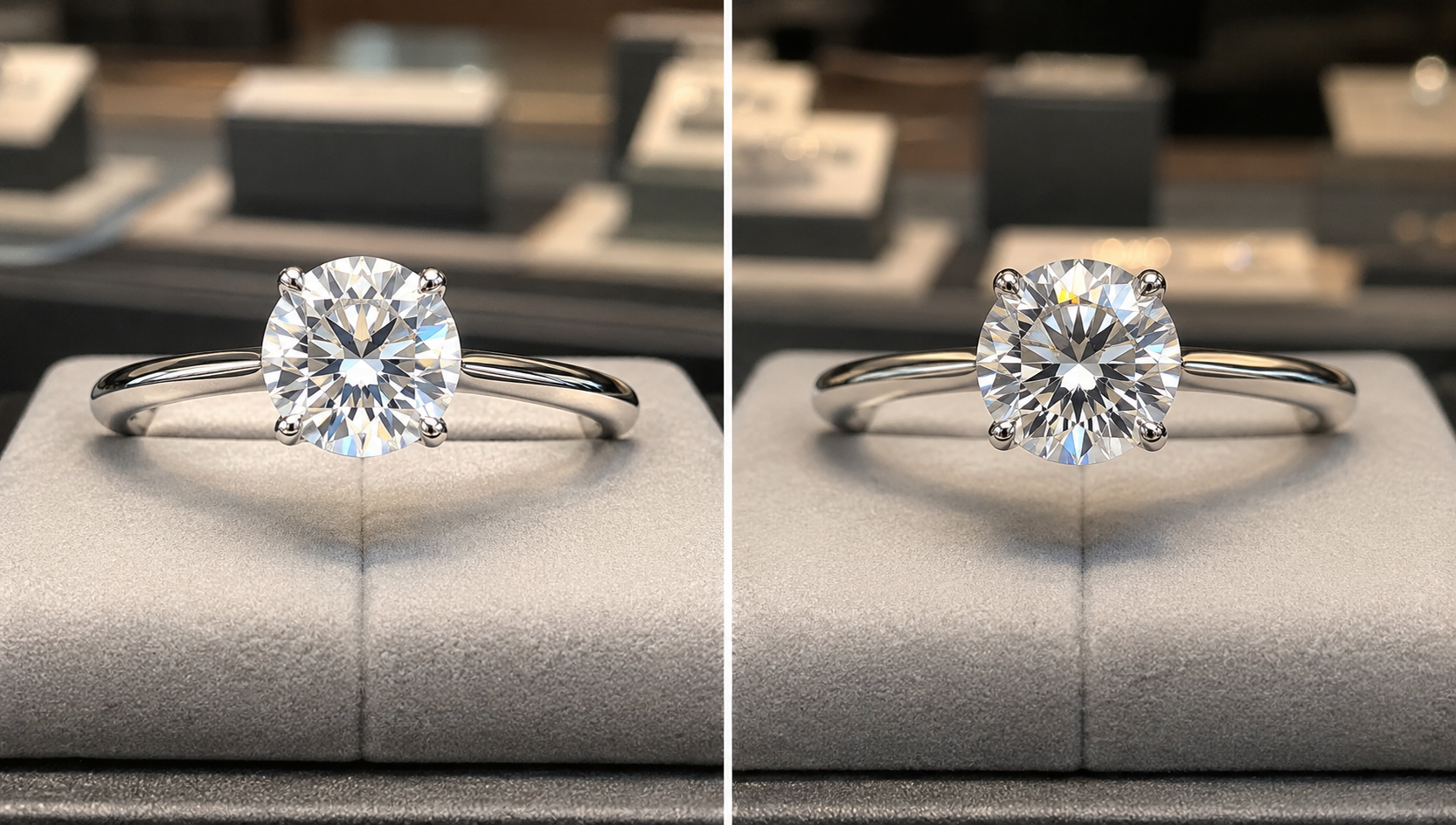
Why it matters: Cut is widely considered the most important of the 4Cs. While the other three are determined by nature (or the lab), Cut is determined by human hands.
- The Goal: A well-cut diamond acts like a hall of mirrors, bouncing light back to your eye. If a diamond is cut too deep or too shallow, light "leaks" out the bottom, making the stone look dark or "dead."
- The GIA Scale: For round diamonds, GIA provides a grade from Excellent to Poor.
- Pro Tip: In 2026, we are seeing a massive surge in Fancy Shapes (Ovals, Radiants, and Emerald cuts). While GIA doesn't give these an official "Cut Grade," our team will help you evaluate their "Light Performance" and "Symmetry" to ensure they dance in the light.
2. Color: The Search for "White"
Why it matters: Most diamonds have a tiny hint of yellow or brown. The GIA scale starts at D (Colorless) and goes to Z (Light Yellow).
- D–F (Colorless): Rare and icy white.
- G–J (Near Colorless): To the untrained eye, these stones look perfectly white but come at a much better value.
- The 2026 Trend: With the resurgence of Yellow Gold settings, many of our clients are opting for H or I color stones. The warm metal makes the diamond appear whiter, allowing you to save significantly on the color grade.
3. Clarity: Identifying the Fingerprint
Why it matters: Diamonds are formed under extreme heat and pressure, which often leaves tiny "birthmarks" called inclusions (internal) or blemishes (external).
- VVS1–VS2: Very slightly included. These are high-quality stones where flaws are difficult to see even under 10x magnification.
- What is "Eye-Clean"? This is our favorite term at Jewelry Authority. It means that while the diamond has inclusions, they are invisible to the naked eye. Selecting an SI1 or VS2 "eye-clean" stone is the smartest way to get the best look for your money.
4. Carat: Weight, Not Size
Why it matters: Carat refers to the diamond's weight, not how big it looks. Two diamonds of the same carat weight can look different in size based on their shape and cut.
-
Is 1-Carat the "Best" Size? In years past, 1-carat was the standard. However, in 2026, the "average" has shifted.
- For Natural Diamonds, the average center stone in the U.S. is roughly 1.16 carats.
- For Lab-Grown Diamonds, shoppers are moving toward 2.0 to 2.5 carats to achieve a bolder look for the same budget.
Frequently Asked Questions
Which of the 4Cs is the most important?
Cut. You can have a perfect D-color, Flawless-clarity diamond, but if the cut is poor, it won't sparkle. Always prioritize an Excellent Cut (or "Ideal") to ensure that classic diamond fire.
Do the 4Cs apply to lab-grown diamonds?
Yes. Lab-grown diamonds are graded on the exact same scale as natural diamonds. A "VVS2" lab diamond has the same level of clarity as a "VVS2" natural diamond. (See our lab-grown vs. natural guide.)
How do I read a GIA grading report?
If your diamond comes with a GIA report, this document serves as its official quality breakdown, detailing the 4Cs and the stone's unique physical characteristics. The report includes:
- Grading Results: The official grades for Carat Weight, Color, Clarity, and Cut (if applicable).
- Proportions and Finish: Precise measurements of the diamond, along with grades for Polish, Symmetry, and the level of Fluorescence.
- Clarity Plotting Diagram: A visual map of the diamond that indicates the type, position, and approximate size of all visible internal inclusions (red symbols, e.g., Cloud, Feather, Crystal) and external blemishes (green or black symbols).
The GIA Report Number listed on the report is often laser-inscribed on the diamond's girdle for identification, though this inscription is not always present.
The Jewelry Authority Difference
Buying a diamond isn't about checking boxes on a certificate; it's about how the stone looks on your hand. Browse loose stones or our engagement collection to start.
Ready to find your perfect match? Book a diamond consultation at one of our Greensboro showrooms. We'll put the stones under the microscope and show you exactly how the 4Cs affect the beauty—and the price—of your next heirloom.